I just finished reading Tomorrow, and Tomorrow, and Tomorrow, by Gabrielle Zevin, and by that I meant I read it on the train to my co-working spot, and while walking to my co-working spot, and at my co-working spot itself, in one continuous three-hour stretch on a Friday morning. (This is the glorious life of the partially unemployed.) It’s been nearly a year since I’ve read a fiction novel, and I was surprised by how easy of a read it was despite holding such depth and complexity. The book is ostensibly about two genius game developers and their friends, but it’s really about creative work and partnership, trauma, and love — and how they intersect.*
But this post isn’t about that book.
I recently started work on a new game. It is, from a narrative standpoint, my most ambitious project yet — the script is already at 37 pages, and it will likely quadruple in size by the time it’s done. I’m currently describing the game as an “underwater sci-fi narrative game with CRPG elements.” Maybe more accurately, however, it’s a Bitsy-like game, made in Godot in all of its HD glory, with a few other mechanics that hopefully make the game more immersive and engaging. Here’s the (draft) game description:
When a routine expedition goes wrong, you plunge into a frigid alien sea in search of your missing crewmate. Explore a sunken spaceship, save or kill its lone survivor, and outwit the monster lurking at your door before your time runs out. An underwater sci-fi fairytale about monsters, friendship, and the lengths we’ll go to bring those we love home.
The main inspirations for this game are In Other Waters, Subnautica, and Project Hail Mary.
In every prior visual novel I’ve worked on, player choices don’t lead to a “good” or “bad” ending. I dislike how entrenched that binary is in this industry. In A Winter Away, the first visual novel I worked on, I decided there would be a challenging choice at the end, but regardless of what the player decides, I wanted them to feel like they had made a meaningfully good choice. I really liked this approach as someone who can over-moralize situations. Often even large decisions — moving to a new city, choosing where to live, deciding to try for a new job, getting into a relationship — are in a gray zone: they don’t inherently have moral weight. From a moral perspective, what matters more is the decision-maker’s motivations and intentions. (Hopefully the decision-maker also has enough wisdom to make a good decision, but a “wise vs. unwise” decision is not as morally loaded as a “right vs. wrong” decision.)
In this new project I’m working on, however, the player’s choices not only can lead to good or bad endings, but they can result in life or death for you and those you love. (That’s quite an escalation from “no bad choices”!) I’m still not sure how I feel about it, but I wanted the choices the player makes to meaningfully matter and impact outcomes. I’m still fine-tuning the branching pathways to try to make it feel fair and honest.
But the more I work on this project, the more I realize that my interest isn’t about making another “choices matter” game.
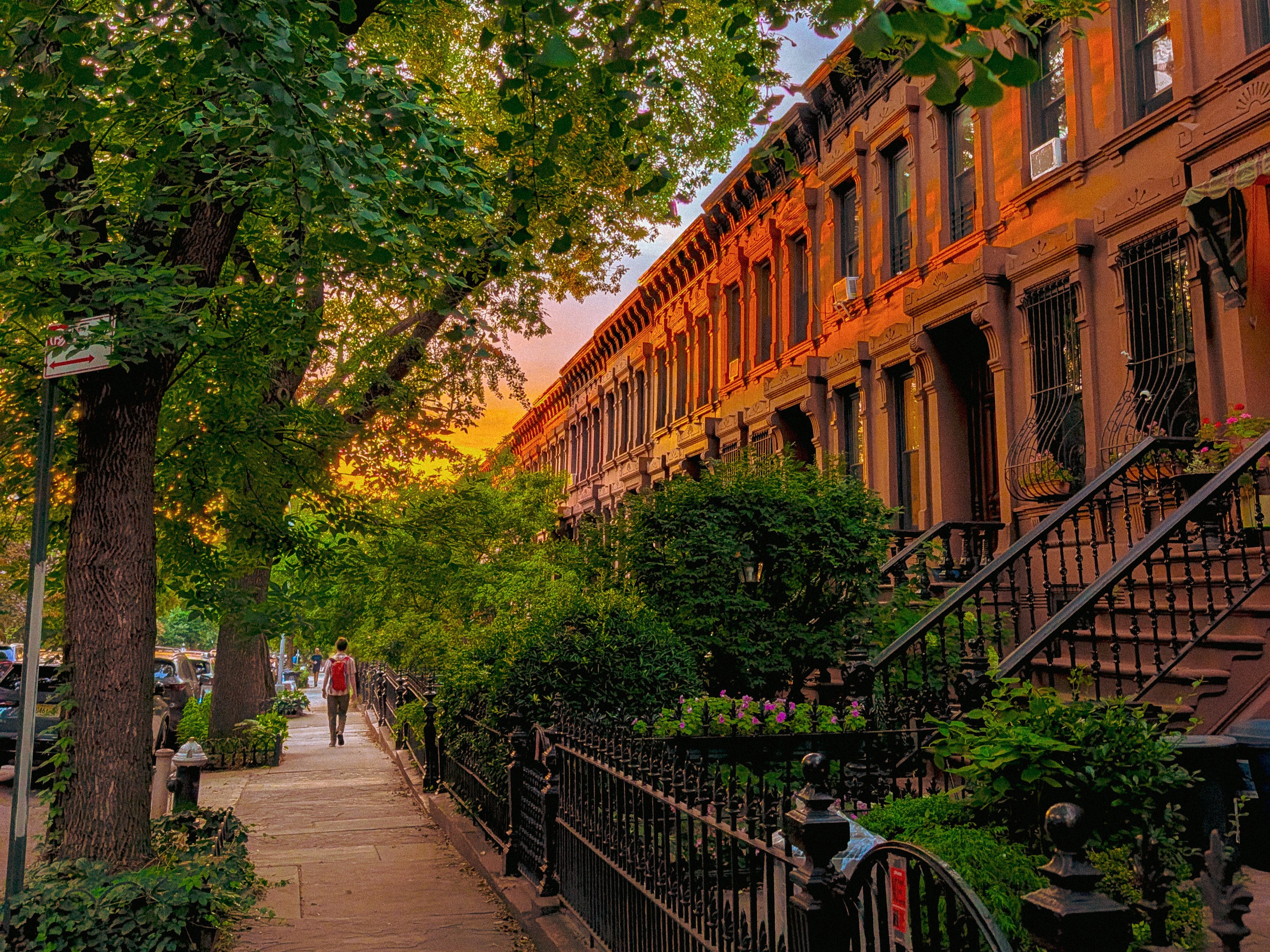
I recently moved to NYC and went on a new friend date with Vera, a book designer who is thinking of starting a master’s degree in philosophy. I was describing the concept for my new game and mentioned that the themes of searching and seeking and finding are a common thread in what I write. She asked me why, and despite it being such a simple question, I stumbled through an answer. The truth is, I didn’t know why. It was only later that I realized I was writing about these themes because I believe they are foundational to human nature.
I suspect most humans have deep longings, even if we can’t quite articulate them. I think we all would like to be loved enough to be sought after and found if we were lost or in danger. I think we all want to matter to those around us. Even if we’re too jaded to be hopeful, I also think we long for a reason to keep striving. Maybe that's partially why movies like Lord of the Rings and Star Wars and games like Citizen Sleeper and Disco Elysium have resonated so deeply with me. Even in their bleakest moments, there’s always a glimmer of hope.
I recently listened to a podcast where Trevor Noah and Zohran Mamdani had an interchange about hope and religion that stuck with me. Mamdani mentioned that Republicans seem to have a “limitless imagination,” while Democrats have constructed an “ever-lowering ceiling of possibility.” Noah said that he believed this might have something to do with the decline of religion on the left. Faith, he said, requires the ability to believe that “this current state that you are in is not the end” — that something greater is possible even when you cannot see it yet. Mamdani agreed, observing that he’d found people still had that kind of trust in houses of worship, even as they’d largely lost it when it came to politics.
I think they’re right that religion builds our capacity for hope in a better future. I don’t think it’s a coincidence that many leaders of human rights movements have had a faith background. It is because of my Christian faith that I still have the capacity to hope at a time where the world feels like a dumpster fire. It’s still possible for me to envision a wonderful future on the other side of the crest, and to work towards that future. And I can do this because of what I believe:
The former removes any existential dread, fear of death, or paralyzing sense of crushing responsibility; the latter gives me a serious sense of purpose and direction for my daily life. This is the meaningful fruit of hope.
Ridiculous, isn’t it? I spent years in high school mired in serious depression, so the fact I can live life hopefully sometimes feels nothing short of miraculous. This type of miraculous hope, a hope that defies logic, is something I’d like players of my future narrative games to be able to access, or at least experience glimmers of.
The goal isn't to make hopeful games. It's to make games where players experience an environment that sharpens the meaningfulness of hope: of searching despite being afraid, loving someone despite not knowing if you'll ever see them again, making scary, consequential choices without certainty.
There’s an old hymn that keeps playing in my head as I write this:
“Jesus sought me when a stranger,
wandering from the fold of God;
he, to rescue me from danger,
interposed his precious blood.”
*The book also reminded me of a friend I dated briefly — we became friends through working on a game. We had amazing creative chemistry. When we started dating, however, things felt horribly misaligned in a way that was baffling, since we both cared about each other, worked well as friends, and were attracted to each other. Life is just funny like that sometimes!
Thank you!! <3

Copyright © 2023-2026 Roman Hyacinths | Privacy Policy
Website built from scratch with ♥ and Webflow.




.svg)